What I Do When Not Painting The Sky, Swimming With Mermaids, Spotting Fairies and Dragons, Making Peace Signs or Devouring Hot Fudge Sundaes

In other words, how I keep food on the table and a roof overhead.

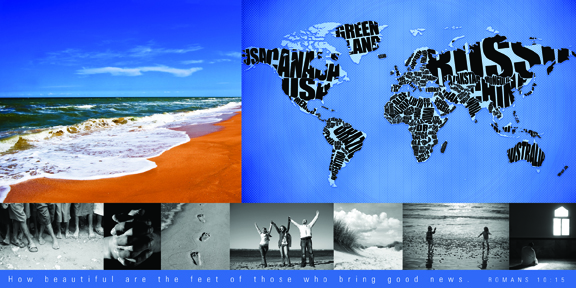
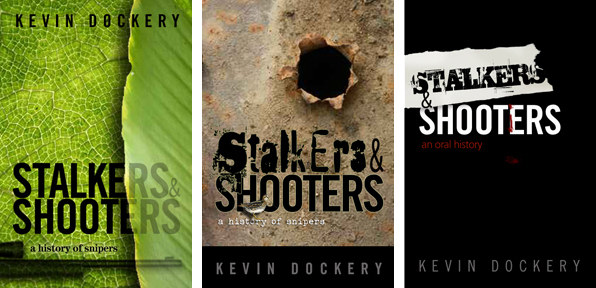
You can always see a full portfolio at saxtonstudio.com, but thought I’d share a sampling of some recent design projects. They range from branding & identity to powerpoint presentations, graphic murals to event themes, book covers to websites.


Got a project that needs to shine? Visit saxtonstudio.com and call us or send an email!
All art copyright © Saxton Studio and client trademarked.
0

Book Trailer for "13 Words" by Lemony Snicket

An altogether fun and delightful book promotion video (reminding me how much I would like to find time to make my own…)  from bestselling author of A Series of Unfortunate Events, Lemony Snicket and esteemed illustrator and New York Times columnist Maria Kalman…. Enjoy!

Thanks to Brain Pickings (a great site for curious things!) for this find!

0

"Where Is My Vote?" ~ A Powerful Design Exhibit at New York's School of Visual Arts

Inspired by an email from an Iranian photographer reaching out for worldwide artistic support to raise awareness for Iran’s Green Movement following the 2009 Iranian elections, the School of Visual Arts has put together an incredible collection of posters, designed by some of the greatest names in graphic design, including R. O. Blechman, Cathie Bleck, Seymour Chwast, Ivan Chermayeff, Milton Glaser, Robert Grossman, Anita Kunz, Yossi Lemel, Jennifer Morla, István Orosz, Woody Pirtle, Andrea Rauch, Ralph Steadman, Gary Taxali, James Victore and Massimo Vignelli, among others.

This display is “design as a social tool” on a grand scale and at its most impressive.

Below are just a few of the 150 potent pieces. You can see them all Social Designzine,  as well as watch the video below of author, design historian and SVA MFA Design Dept. Co-Chair Steven Heller discussing an interesting, in-depth look at the show’s meaning.

Copyright, Cathie Bleck

Copyright, James Victore

Copyright, Massimo Vignelli

Copyright, Milton Glaser

Copyright, Yossi Lemel

The exhibition runs through September 25 at The School of Visual Arts, Visual Arts Gallery, 601 West 26th Street, 15th Floor, New York, NY.  For more information, call 212-592-2145 or visit SVA’s exhibit  site.

0

Brooklyn Book Festival: Sunday, Sept. 12

This Sunday will be a great big day for book lovers. Along with top literary stars, a rich conglomeration of authors and publishers gathers together each year at one of the east coast’s most visited book festivals: The Brooklyn Book Festival.

The Festival runs from 10am – 6pm on September 12, outside Brooklyn Borough Hall: 209 Joralemon Street, Brooklyn, NY.

And there, nestled in Booth #70 will be some of the most beautiful children’s books at the fair… So if you make it to this cool event, be sure to stop and see my publisher, Shenanigan Books ~ you guessed it, at Booth #70!

2

"52 Weeks of Peace" Full Circle

It’s official now ~ we’ve come full circle from September 1 2009 to September 1 2010. And while all 52 Weeks have been posted, something didn’t quite work out with the math (which could explain why I’m in the arts and not a mathematician?). So here’s the bonus week as promised (and created with joy by my lovely daughter I have to say!). Besides, it’s only fitting to end, as begun, on my birthday.

And here are my wishes this year ~  That thought by thought, action by action, this nutty, misguided, confusing, troubled, hopeful, amazing, strange and beautiful world may become a better place for our dreams to thrive. That we all choose to participate in the unfolding of what brings us our own individual peace. That we take a bite of something good and make a delicious offering of that something to ourselves, our friends, families, neighbors, co-workers….  That we uplift and respect and care and appreciate. That we smile on one another more.  Imagine the peace that would bring! … and if it only brings peace to a few, know that within those few, the circle has already widened.

Sweet peace to all ~


4

Week 52: "52 Weeks of Peace"

As the “52 Weeks of Peace” series comes to its inevitable end, it’s my hope that the spirit of mindful peace will carry on long after the last posting. I hope you’ll find peace in unexpected places ~ and nurture its presence. I hope you’ll seek it, recognize it, allow it, and share it. There’s great power there… beginning with you, me, our families and friends. It doesn’t have to be a movement you join; more importantly, it’s a movement you feel within.

Here’s to planting, growing and tending gardens of peace ~ within ourselves as well as “out there”.

Thanks for sharing this journey together. Cheers all!

PS: Because the series started on September 1st, there will be a “bonus” posting next week.

PSS: Remember, all 52 Weeks are posted here!

7

Winslow Homer Commemorated

One of the great American painters, Winslow Homer (1836 ~ 1910), has his own US postal stamp. I’m glad to see it. Despite post office troubles, there’s still something quite honorable about what goes on a stamp.
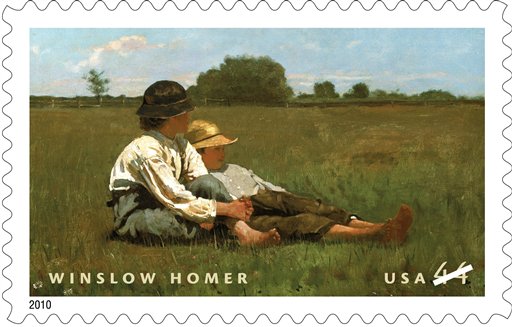
Looking at this piece, so reminiscent of less complicated times, feels somehow exuberantly refreshing in today’s world.

The stamp, a reproduction of his 1874 painting “Boys in a Pasture”, was revealed a few days ago at the Maine’s Portland Museum of Art, in conjunction with an exhibit of 28 of Homer’s watercolor and oil paintings.

To see more of his work, here’s a nice slide show from the National Gallery of Art.

……………………………………………….

And in case you want to know more…*

Winslow Homer was born in Boston, Massachusetts, in 1836, the second of the three children, all sons, of Henrietta Benson and Charles Savage Homer.

At the age of 19, Homer apprenticed with the  J. H. Bufford’s lithographic firm in Boston. Although the superior quality of his work earned him more and more responsibility, he found the work stifling and tedious, and upon attaining his majority he left the shop to become a freelance illustrator.

In 1859 Homer moved to New York City, where he studied briefly at the National Academy of Design, took a few painting lessons with Frederic Rondel, and set up a studio at the 10th Street Studio Building. For the next 17 years, his major source of income came from drawings for illustrated weekly magazines, such as Harper’s Weekly, Frank Leslie’s Illustrated Weekly Newspaper, and Appleton’s Journal.

He devoted increasing attention to painting, however, and in 1865 was elected a member of the National Academy of Design and was further distinguished by the exhibition of his Prisoners at the Front in the Paris Exposition of 1866.  Homer went to Paris that year, but little is known of his activities during the ten months he spent abroad.

Domestic travel for the next 15 years included trips to the White Mountains in the summers of 1868 and 1869, the Adirondacks, and Gloucester, Massachusetts, in 1873.  In 1875 he submitted his last drawing to Harper’s Weekly, ending his career as an illustrator. He traveled widely in the 1870s in New York State, to Virginia, and Massachusetts, and in 1881 he began a two-year stay in England, living in Cullercoats, near Newcastle.

(According to another bio, it is significant that, when Homer returned to Europe in 1881, he did not go back to Paris, which was bursting with American art students at the ateliers. He chose, instead, the small fishing community of Tynemouth, on the cold gray northeast coast of England.)

Returning to America in 1883, he settled on the rugged coast of Prout’s Neck, Maine, where he would live for the rest of his life. He continued to travel widely, to the Adirondacks, Canada, Bermuda, Florida, and the Caribbean, in all those places painting the watercolors upon which much of his later fame would be based.

In 1890 he painted the first of the series of seascapes at Prout’s Neck (the most admired of his late oil paintings). Homer died in his Prout’s Neck studio on September 30, 1910.

* References: http://whitemountainart.com/Biographies/bio_wh.htm and http://www.nga.gov/cgi-bin/pbio?15100


0

Go Play!

I posted this piece a little over a year ago. But as I’ve been feeling “all work and no play”, I thought it worth a repeat performance.  Sometimes you need reminding to make play a priority. So I’ll leave you with this, as I’m off … to play now!

The Importance of Playtime

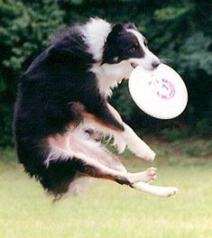
dog playing frisbeeWhen was the last time you jumped up and down like a kid, or played frisbee in the rain … just for the fun of it? If you have, you’re better off.  If you haven’t, maybe it’s time!

I recently saw bits and pieces of a TV documentary about the power of play. It showed images of wild animals, who might normally be mortal enemies, engaged in play. And children, of course, using all their natural talent for having a good time.

The essential message though, was that play is not just for fun. And it’s not just for kids or animals. It’s actually really, really good for you.

And when you think of it, who doesn’t like to play? I know I do. And knowing that it’s vitally beneficial for our well-being, makes it even more inviting.

But sometimes we adults can get so darn serious, or acquire some heavy sense of self-importance, or feel so burdened with the weight of our individual worlds (not to mention the world at large) that we don’t make room, or forget to make time, or heaven forbid lose the ability, to be playful.

By continuing to “play” throughout our lives though, we increase our brain’s learning capacity and become more productive. We’re more balanced, happier and well adjusted. We work better, and we live better. And seriously, it’s a lot more fun.

As Stuart Brown talks about in the video below, “play” seems to be its own separate biological entity. It’s inborn. It has a great evolutionary purpose. And this I believe to be 100% true. Yet there really is no particular purpose to play other than the purpose TO play.  The point is to have fun. And the benefits are in the side-effects: pure, unplanned, and positively life-giving.

Dr. Stuart Brown’s research shows play is not just joyful and energizing — it’s deeply involved with human development and intelligence. Through the National Institute for Play, he’s working to better understand its significance.

Share

2